
Spiritual but not religious?

There's a conversation beginning over on the Speaking of Faith (SOP) site about the relationship between spirituality and religion.  Since I've often reflected on the spiritual awakening taking place today and how religious institutions often stand in the way, I thought you might be interested in following along or commenting in order to help the SOP folk prepare for an upcoming interview with Anne Lamott. Annie says: "Sober people say that religion is for people who are afraid to go to hell, and spirituality is for people who’ve been there. And I think faith, for me, is a word that speaks much more to a belief and an interest in matters that are spiritual rather than the institution and creeds that you associate with religion.”

And SOP says: We’ve been thinking about Anne Lamott a lot lately as we continue to build a dialogue about what it means to be spiritual but not necessarily religious. (We’re looking to make a full-fledged production out of your responses, so add your reflections here — and please share this link with others.)
Beyond the cluttered heart

In the awakened spiritual life, the key is not merely to get rid of the heart's clutter, but to live unattached to it, without identification with all that causes you to love it and want to hold onto it.   You want to get to the place where you no longer feel compelled to have it around, period. This freedom is the fruit of interior prayer, watchfulness, awareness.

Continual, habitual returning to that deep union with Christ within means that you become increasingly non-attached and disidentified with the thought-clutter that once littered your inner life, though you probably could not see it at the time.

Prayer as Heart-Work

Why should you do your inner, spiritual work? Why practice the prayer of the heart?  Why enter the silent land within? Because it is the chosen dwelling place of God.  It is the "palace of Christ in which he retires" (St. Macarius the Great).  It is the very seat of eternity, the gateway between heaven and earth.  The Holy of Holies.  Put another way, it is the bed of your Beloved where the deepest intimacies you seek are shared.

In a heart, then, like a house where clutter rules the roost (both the most beautiful things and good, as well as the most ugly and evil of things), all this is hidden, covered, and ignored to the great tragedy of you who could know so much more.

Clean up your heart.  Do your inner work.  Make the bed of your heart worthy of Love.

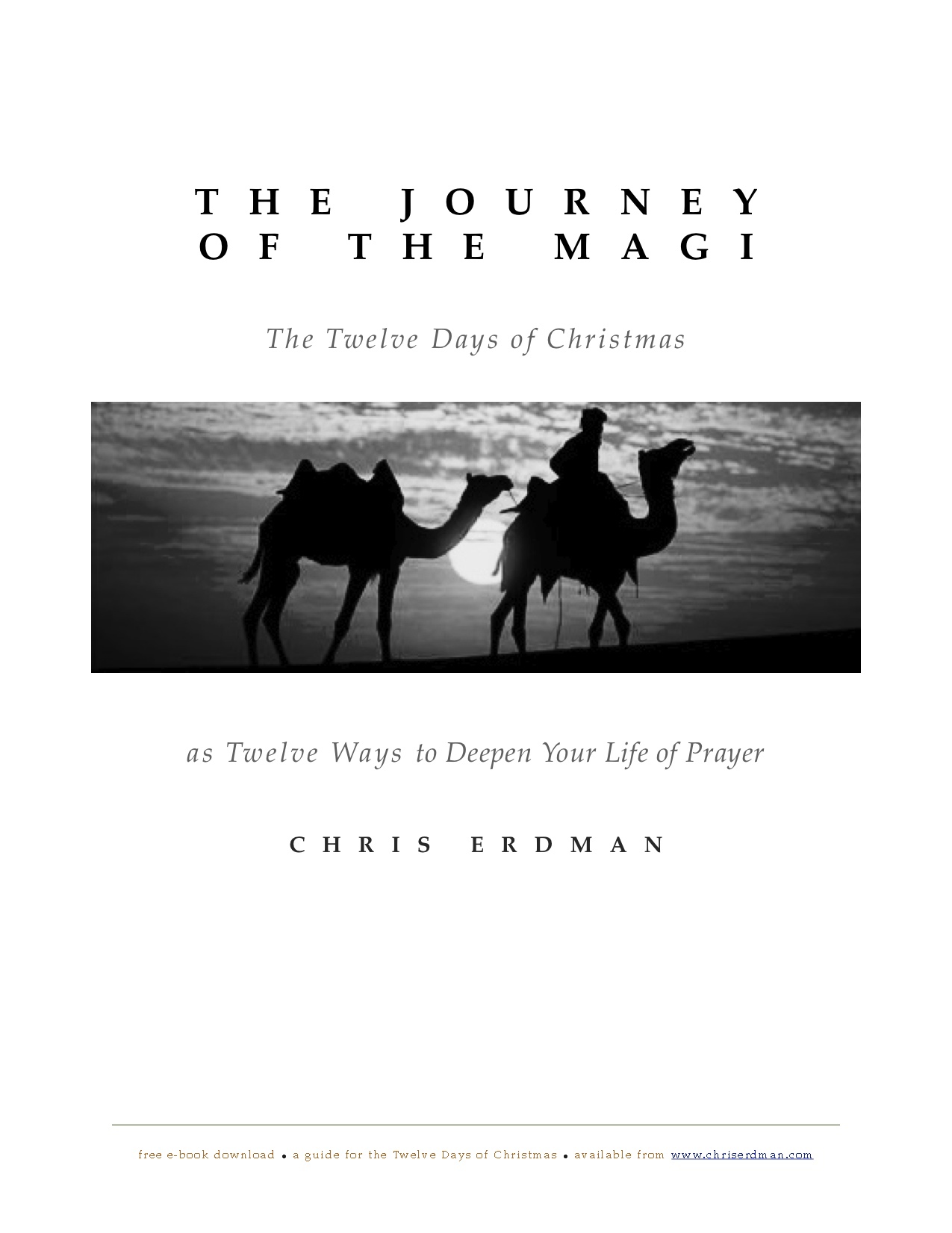
New eBook: The Journey of the Magi

I've turned the popular meditations offered during the Twelve Days of Christmas as twelve ways to deepen and enrich your life of prayer into a free, downloadable eBook.  Click here to download the eBook. This brief and suggestive series of meditations involves you in the deeper journey of living prayer drawn from the ancient Christian tradition shared by both the Christian East and West.  Best, or course, during Christmas, but helpful at anytime you need to strengthen your practice.  Here are pointers to the twelve ways:

Journey of the Magi, e-book, cover

  1. Awareness
  2. Awakening
  3. Companionship
  4. Wonder
  5. Walking
  6. Desert
  7. Words
  8. Humility
  9. Darkness
  10. Perseverance
  11. Fire
  12. Return

Amazing Grace for the Wounded Soul

Theologian Ray Anderson has penned an important, yet little known book that is help for all who are struggling with broken hearts, wounded souls.  Judas and Jesus: Amazing Grace for the Wounded Soul is helpful not only for those who are facing the darkness of their own despair, but also for those who love them and try to walk beside them. It's particularly relevant in these difficult times.  It's a good resource to help us move forward in at least one of the directions I charted out in my recent sermon after the tragic death of a friend who was haunted by severe depression.

About the book, Eugene Peterson says: "As theologian and pastor, Ray Anderson courageously probes the Judas experience in order to help us get in touch with the depths of despair and hopelessness within ourselves.  He finds there, where we often least expect it but should dare to embrace it, the forgiveness of Jesus, the grace of the risen Christ."