Desperate, I Opened the Door

eBook excerpt-- I’d resolved to become holy, but it didn’t take long for the ordinary tasks of ministry to bury the light that entered me that day.  And because I had no one to show me the way, I slipped back into a life that, while fruitful on many levels, left me increasingly dissatisfied.  Over the course of the next decade and a half, ministry became subtly yet increasingly colorless and drab, sometimes downright dreary.  Not entirely, of course.  In fairness to the God who’d called me and to the people I served, there were enough bright spots to keep my heart in the work.  But bright and lovely as these persons and experiences were, they still couldn’t mask the widening gap between who I was called by God to be and the life I was actually living.

When crisis finally came knocking that day late into the second decade of my ministry, I took a long, sober look at myself and saw a person who’d set out as a pastor but who along the way had become a manager—a fairly competent manager, but still a manager.  I was able to write memos, lead meetings, organize events, raise money, supervise staff, and keep track of details.  I was running a relatively successful church organization, teaching at a nearby seminary, writing, and consulting.  In addition, I’d kept track of a remodeling project in our home, and was helping our teenage sons negotiate their path to adulthood.  On top of this I also did what I could to provide the home environment that made it possible for my wife to teach fulltime while she took night classes to complete her credential in special education.
ReturningtotheCenter - ImageBut all this just helped to mask the crisis within and assure me that for all intents and purposes people were pleased with my work, and that I was, by most measures, successful.  I could have been quite pleased with myself but for the light that once had pierced me.  What light remained would allow me no real pleasure in my status or achievements.  It showed me that little I was doing really required God.  And none of it needed a saint.  I had become laughable, precisely the oxymoron I’d resolved not to become those many years before.  I was stretched terribly thin—like too little butter spread over too much toast.  And, while in many ways successful, I knew I was truly failing, not only in what God required of me but also in what my family, friends, and congregation truly needed.  It became increasingly difficult for me to assure myself that the life I was living was the life the Light intended for me.

Desperate, I opened the door and embraced the light of God that lives inside the terror of every crisis.  Fifteen years earlier I hadn’t known what to do with the light of God that pierced my heart and whispered to me of holiness.  I hadn’t the foggiest idea then how to become a saint, and I didn’t know a soul who could show me how.  A decade and half later I figured I at least knew where to look for a few great souls.  And so, I determined to track them down . . . or die trying.

Hill of Crosses

The Cross of Christ has certainly divided people over the history of our world, despite its intent to heal the world.  On a hill in Lithuania thousands of Crosses, brought by pilgrims from all over the world, stand as a living testimony to the prayers of many for peace.  A friend of mine recently traveled there and offers this photo meditation for those who cannot witness its beauty first hand.

Prayer and Time: Starting Fires with the Christian Seasons Calendar

I’m sitting in the outdoor food court called 7+Fig.  It’s in the Ernst and Young Plaza at Figueroa and 7th in downtown L.A., and it's Farmer's Market day.  A marvelous setting in the midst of a teeming city.  It’s early afternoon and most folks here are finishing a late lunch, some anxiously glancing at the time on their iPhones and Blackberries . . . or for messages.  They’re clearly aware of the few moments they have left before hustling back to offices that ring this plaza like the pigeons watching the scene from high above, anxious for a scrap or two. We all have a relationship to time, but most of us blow through it without much thought given to the kind of time we’re living.

I’m watching a young couple, dressed to the nines in power attire.  I’m sure they’re married.  They’re both wearing a wedding band.  And they’re sitting alone, but clearly take each other for granted.  Work associates would be engaged with each other.  But this couple is bored . . . or tired.  They have this little squeeze of time, but aren’t alert to it.  Not present to it.  Or to each other within it.  They’re elsewhere.  The past. The future.  But not here, in the present.  Failing the time they have now, they’re failing each other, and they're failing love.

We spend the large part of our lives with minds hooked by the past or lured by the future.  But we can’t meet God in either of those places.  Only here.  Only now.  There is no other time but the present.

Christian Seasons CalendarThis is why I celebrate a time-healing project by a small congregation in Vancouver, British Columbia.  What started out as an effort by a handful of disciples to dwell in the present time with full awareness of its meaning, the Christian Seasons Calendar has become a global phenomenon.  Says Eugene Peterson, “This calendar brings fresh awareness to the essential sacredness of what is so easily profaned by hurry or sloth.”

Most people in this plaza live their lives by calendars—paper or electronic.  But few of those calendars tell them anything about the sacredness of the day or season they’re living.  Right now it's the long season after Pentecost for Christians (or Kingdomtide) and daily we live alert to the mischief of the Spirit, Who might come down on us like a pigeon diving for food . . . or Who could just as surprisingly kindle within in this couple a new flame of love.

Time-keeping is revolutionary in big and small ways.  Right now, I’m wishing this dear couple before me was more alert to the sacredness of what’s so easily profaned by the tediousness of the calendar they’re forced to live by.  Not only would they live more alert to God, they’d love each other more fully as well.

I pray to see their eyes connect for just a flash, their hands touch . . . and fire fall right here and now at the corner of 7th and Fig.  If not now, maybe tonight when they fall into bed.

"Teach Us to Pray" :: Prayer as Dance

From Facebook, Lydia Morris commented yesterday on my Flamenco and Prayer post. “Wish I could pray like that,” she says, “strong, fearless, bold, and with all of my everything. Oh how the enemy will tremble when the we fall madly, insanely in love with our God, and can dance and pray with nothing held back. I see Jesus now inviting His beloved to dance.”

Last December 31, 2008, I wrote this poem that improvises on the same theme:

Teach Us to Pray

And this is what I saw–

Leviathan leaping, full length, in radiant delight, up from the dark depths of Mystery.

The night sky, clear; the moon full casting its silver light across the whale-fractured sea.

And then, she crashes full length A million silver shards dancing their holy glee.

As she disappears again into the dark, silent depths, to soak in Thee.

Why then pray like some dead fish in this, God’s sea?

Dance, fly, play, plunge. That’s what prayer is meant to be.

Flamenco and Prayer

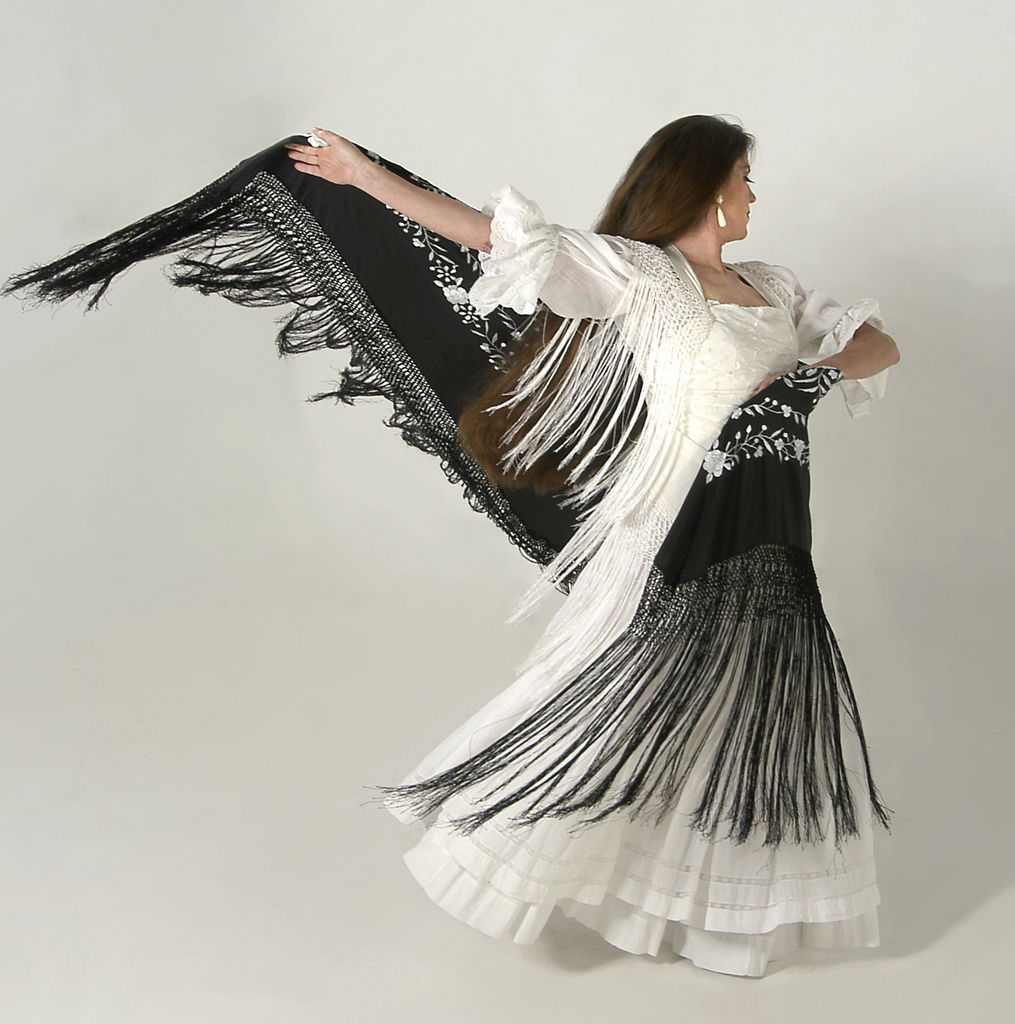
On a recent hot evening in Fresno, La Canela and El Quijote and Cerro Negro, gathered some fifty of us, crowded into the courtyard of our host’s home, into the spirit of Flamenco.  I’ve known Flamenco, even traveled several times to Andalusia, the southern region of Spain, which is home to Flamenco.  But there I’d encountered only commercial Flamenco.  Though beautiful, it’s commercialization misses the true spirit of Flamenco.

duende mantonFlamenco is more than music, song, and dance.  Traditional Flamenco, the Flamenco of the gypsies is communal, spiritual, even contemplative.  In Flamenco—not performed on a stage, but in the round—all participate.  All are together in the sound and movement.  All are caught up in the ecstasy and agony that is the soul of Flamenco.

It’s not saying too much to say that Flamenco is prayer.  And Flamenco helps me see more fully the nature of expressly religious prayer—the kind of prayer I’d be better off praying.  Sadly, like commercial Flamenco, much praying misses the ecstasy and agony that is true prayer.

The art of Flamenco makes me wonder how I’d pray the Psalms, for example, if I let the gypsies show me how to pray them—for the Psalms contain the full anatomy of the human soul.  Too often I pray them as if I were reading a menu.