Jesus, The Teacher Within: An Invitation to Prayer

In the past, I've suggested a few important books on contemplative prayer, including: John Main's Word Into Silence (which I reviewed here), and

Cyprian Consiglio's Prayer in the Cave of the Heart (reviewed here),
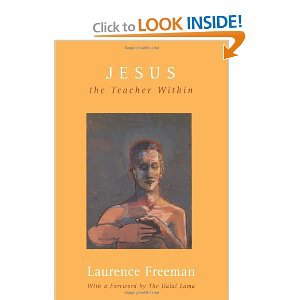
FreemanHere's another I'm reading now.  Fr. Laurence Freeman is a Benedictine monk and the director of the World Community for Christian Meditation, following the path set out by John Main (above).  And he'll be in Fresno this coming February 8-10, 2013, as part of our annual Prayer of the Heart Conference!

I strongly urge you to read this extended meditation on the person of Jesus as the one who prays within us.  Freeman extricates Jesus from centuries of doctrinal debate that's left us with very little of the Jesus who seeks a genuine relationship with us at the core of our beings, that is spiritually.  It's this relationship that we're most hungry for--not an idea to be debated, nor an ideology to be defended, but a living presence to be befriended with more than our brains.

This book does what my teaching on my site aims to do:

  • to reach and empower those who seek "a deep and continual experience of intimacy with God,"
  • those who long to awaken "to the fire of the sacred in every day life and walk continually in it through unceasing, interior prayer."
  • those who wish "to pray in such a way that we live with a nearly continuous sense of the Holy no matter what we’re doing or where we are."
Reports on how minds and bodies are changing through prayer

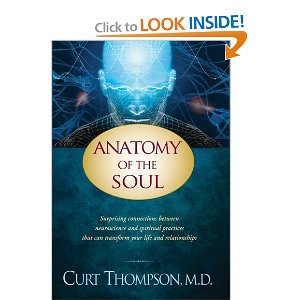
Dr. Curt Thompson, author of The Anatomy of the Soul: Surprising Connections Between Neuroscience and Spiritual Practices that Can Transform Your Life and Relationships, on the relation between prayer, scripture, story, and neuroscience:

How prayer can make you whole

Prayer is ultimately about relationship.  It's so much more than asking things of God, or even saying things to God.  It's a participation in the relationship shared by the Trinity and the relationship shared between the Trinity and humanity.  It is, in two words, about becoming whole. AnatomyNeuroscience offers us some marvelous insights into the power of relationships to make us whole (they can also wreck us).  And interpersonal neurobiology, a branch of contemporary psychology, teaches us about the power of safe, secure attachments to literally remake the brain.

Here's a recommended book exploring all this.  I've been researching this area for the past year and exploring the implications for spirituality.  I've just started this book, but a perusal suggests it's just the right book to bring the primary sources (Allan Schore, Dan Siegal, and so many others...see the Norton Series for source materials) into conversation with Christian spirituality.

Dr. Thompson's book is short, well-written, and deeply immersed in the wellspring of Christian spirituality.

See also Thompson's useful website for more.

Prayer gives us hearts to do love

Too much spirituality is made complex, even unworldly.  Prayer gives hearts to do love not merely think or talk about it. An award-winning brief film.  It has only a handful of words, but speaks volumes.

What is love trying to do through you?

God is praying you into a life of prayer

Prayer—conscious, intentional, and in the words of St Paul, “unceasing” (1 Thessalonians 5.12)—is the highest expression of our intellectual, physical, and spiritual life. Prayer, when we are awake to it, is life.

When you consciously and intentionally enter into the prayer that is always going on around and within you, you become spiritually active. You are free and more fully aware of being alive to more than your “self-made me” and its many compulsions, anxieties, and obsessions.

This “lesser you” will only keep you curved in upon yourself, fallen into the sin that separates you and contracts you and closes you off from the presence of the Beloved, who is always near and whose prayer is always calling you to the friendship with God that is prayer.