
All Blog Posts

Spirituality and parenting older teens

From a note to myself when my sons were in their late teens.  I was struggling as a father to give them the direction they needed while learning to step away and let them find their path.  Never as easy dance!  But parents must learn to adjust parenting approaches as kids develop.  That adjustment requires a spirituality that enables the shifts to take place, an experience of prayerfulness that make releasing our kids possible:

Why do I try to manage the path my sons take? Managing them isn't really about them; it's about me. I'm only projecting my anxiety upon them, fueling their self-doubt, their resentment. Their life is their life, not mine. What they most need is my love, my confidence and wisdom when they ask for it, my presence when they approach me.   So, don't answer questions they're not asking. Don't do for them what they don't want done. Don't suggest what's not on their minds. And don't protect them from their mistakes---even their serious ones. Remember your youth. remember that you've not learned anything worth learning without pain. Tend to your own life, prayerfulness, wholeness---your own path. There's enough work in that alone. Love what is, not what should be, could be, or would be if only . . . .  Crucifiy your illusions, idolatries, ideals. Delight instead in everything here and now. This is life. You have no other.

They know your values. They know what works, even if they're unconscious to it now. Let them fail and put their own practices into play, learning their own values---which may or may not be yours. That is success. But keep pushing and demanding, and you'll not only push them away, you'll cripple them.  Do what you want and need to do. No more. And keep watch over your wounds that can quickly turn to stifling, oppressive demands that make us all into losers.
The path of unshackled happiness

In wordless prayer, my mind began to carry me away, searching for things that would make me happy.   All things I don't have. All the "shoulds" and "oughts" that hound me with the persistence of a pack of dogs. Then suddenly all this cleared and I saw (or rather, felt) the great hilarity of it all. Happiness broke upon me despite what I don't have. Hilarity, precisely because in not having them---those circumstantial comforts, the conditional supports to happiness, the "good life"---my ego was detached momentarily from needing them.

Just as I began to lament this most recent challenge to all my "scripts" (a personal experience of loss), I became aware of the grace in it all---the charismatic, supernatural action of the Holy Spirit to strip me of anything natural, even good things, that might bring me happiness.

When the ego is stripped of all superficial things that usually bring it happiness or comfort, it's natural to lament the loss and become anxious or despondent. The ego is used to being propped up.

But crisis, loss, and trouble come into our lives and can be experienced or received as grace.  They have the power to strip us of the shackles of our lesser attachments.  Then ours souls can soar free into unrestrained happiness.  We are those who can no longer be separated from God by any-thing.

This is true freedom.

Leadership models from the 4th century

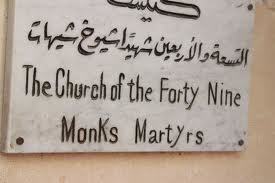
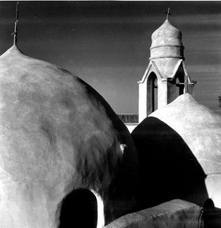
From my journals.  Monday, May 21, 2007 St. Macarius Monastery, Wadi Natrun, Egypt

wadi natrunMerton writes that we won't find the likes of the desert fathers and mothers today---not even in Skete. What the fathers did had not been done before. With them "you have the characteristic of a clean break with a conventional, accepted social context in order to swim for one's life into an apparently irrational void."

The examples and sayings of the Desert Fathers have become themselves conventional stereotypes, models for the accepted social context of monasticism which is no longer shocking.

"We are no longer able to notice their fabulous originality," writes Merton. "We cannot do exactly what they did. But we must be as thorough and as ruthless in our determination to break all spiritual chains, and cast off the domination of alien compulsions, to find our true selves, to discover and develop our inalienable spiritual liberty and use it to build, on earth, the Kingdom of God. We need to learn from these men of the fourth century how to ignore prejudice, defy compulsion, and strike out fearlessly into the unknown."

How to become wise

From my journals.  Sunday, May 20, 2007 St. Macarius Monastery.  Wadi Natrun, Egypt

wadi natrunFather Zeno and I spoke for quite a while tonight. I asked him about the path to wisdom.

"Remember that you are nothing," he said. "And remember that you are everything---bought as precious by Christ. And if you're everything, so are others; you are to love them, embrace them. You will find yourself in them, and you will find them in you. Love is the path to wisdom. When you are nothing, you have nothing and need nothing and you are free to live in love."