All Blog Posts

The Ecstatic Faith of Rumi

Following up on yesterday's post about Samir Selmanovic’s new book, "It's All About God" What can we learn from those who pray from within another tradition?  How do the mystics transcend the God-boxes of religion, while living fully and freely and unashamedly from within their traditions?

The 13th-century-Persian-Sufi-mystic (jeez, too many adjectives!), Rumi, is one of those.
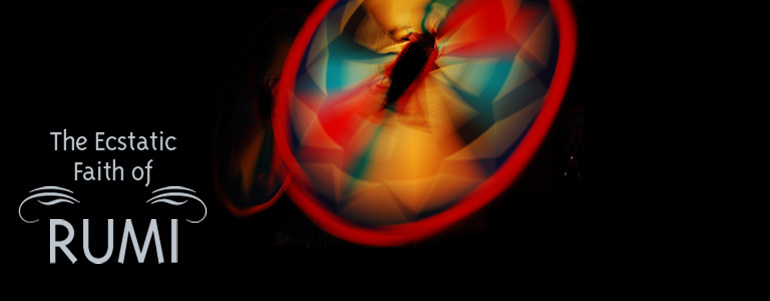
RumiHere's one who can help us transcend the resurgent religious wars of this 21st century.  And here's a podcast interview between Speaking of Faith's Krista Tippet and  Dr. Fatemeh Keshavarz.  A delightful romp with Jalāl ad-Dīn Muhammad Rūmī as professor Keshavarz explores the way Rumi improvises on the Islamic tradition in ways that transcends the divisions of today's world.

Click here for the podcast.  The site includes reading and a video performance of Rumi's poetry.

It's All About God

Ryan Bell's posted an introduction to the new and important book.  Samir Selmanovic's "It's All About God." The conviction that undergirds this site is that the life of prayer, spirituality, is all about God.  Prayer, as our essential relationship with God, transcends religion.  It must if it is to contact God.  I wonder if Samir is one of the emerging voices at this crucial hinge in history who can help us past the apparent impasse of religion and into the Mystery known as God.  So, I also wonder if  Samir's vision might help us foster a fuller spirituality. From the dust jacket: “Samir has written a book that reads like an extended poem; an ode to life. Where others see only the darkness and destructiveness of religion, Samir sees beauty and hope. Where others see only competition and violence, Samir sees synergy and life. And his vision is no simple syncretism; a blending of all religions into one inoffensive ‘smoothie’ of goodness and light. This book is a celebration of postmodern ‘otherness’ of the first order."

I also wonder about the relationship between religion and spirituality.  On the one hand, without the way religions render God to us--the language, ritual, order--what do we really have of God?  And yet, doesn't religion too often box God up too tightly?  Don't the defenders of a particular religion's God too often exclude the other, make the other into an object, a target, and tragically a victim of religious zeal?

Watch Samir talk about his new book, his remarkable journey among the religions, and his vision for our future as religious people seeking God.  Does it hint at the way forward for us?

Improvise on These Five Ways and Find Time for Prayer

Much of my life I've felt simply too busy to pray.  I crave God, and know that periods of stillness before God are essential for developing the intimacy that is life giving.  But--and here's the rub--there's just too much to do. Over the last few years I've shifted.  It's not that making time for prayer is easy; it's still a struggle.  But I've reframed the way I view what I do.  Desperation (as I've written about before) is a marvelous motivator.  Desperation forced me to change my diet and habits half a dozen years ago when my health dropped through the floor.  And part of that change meant a shift in my daily practices.  Prayer--contemplative stillness before the Source of All--is simply not an option.  It is life.  To be driven along in the garbage and clutter of a chaotic life was never appealing, but I felt powerless against it.

Here's a link to a great article that offers five ways to carve out time for renovating a chaotic life and making time for exercise.

Yeah, make those changes--stubbornly, doggedly--and live better.  But I can't help but wonder what transformations we'd know if we got exercised about the sacred and made similar changes so we could plop down before the Holy for awhile each day.   I think our life depends on it.

Whether it's because we're unorganized, unmotivated, or simply over-tasked, we’re all too busy. If I were to ask you to dedicate an extra hour each day for something, you'd laugh and call me crazy. However, what if I asked for a fraction of that? What if I wanted 30 minutes of your day and promised that the time investment would actually increase your productivity each day? Not only that, but you'd potentially live longer, perhaps be happier, and definitely have more energy.

That doesn't sound like a bad deal. A little prep work, a small time investment, and loads of new attitudes and productivity gains. Where is the catch?

Those who think they have no time for bodily exercise will sooner or later have to find time for illness.

Many today are finding that the body and soul were never meant to be disconnected.  Joining exercise and prayer is the path not only to healing, but to better attitudes and greater productivity.  But we will have to choose to make changes and swim against the stream.

Prayer as an “Easy Tour”

From my journal | Tuesday, May 22, 2007 | St. Marcarius Monastery, the desert of Skete, Egypt

The key to prayer is to stop trying, stop seeking, stop posturing, and simply open to Christ, greet him adoringly, and then let my love for him carry me blindly, trustingly, wherever he leads.

Matthew the Poor calls pure prayer, prayer of the heart, contemplation, an “easy tour”—something so simple it is nearly unbelievable by the sophisticated mind (From Orthodox Prayer Life).

“It requires a simple and easy-going soul that can go on, caring little how or where it goes. This may be likened to walking in the dark in simple faith, making no use of the sense, mind, or imagination. It is as though a blind man were guided to walk along a path free of stumbling blocks or other impediments without boundaries on the left or right—a path that is seldom trodden by anyone. This blind man may have a simple heart, a clear conscience, a serene mind, and a calm imagination. In this case, he would advance rapidly forward in faith without confusion, as an open-eyed man would do. But if the blind man were a sophisticated, skeptical, and fanciful philosopher, he would grope his way with a stick, and because of the existence of ditches, barriers, or wild beasts, he would stumble on the way. After a while he would prefer to sit down rather than walk on.”

As helpful as methods for prayer may be (and in many cases, necessary for the beginner, and for those who get stuck or lost along the way), it is love above all that leads the praying person across the final leap toward real oneness with God, a leap no method can span.  Love then, and do so simply . . . let love carry you across until there's only Love.

Can One Talk About the Experience of Prayer?

In what way is prayer like sex--too intimate a mystery to describe?  Yeah, well, lots of people talk about sex.  Sex is paraded around in movies, on TV, and in music.  And to a large degree it's cheapened.  But there are forms of public art that reveal the beauty and wonder of sex and can invite us deeper into its mystery.  We'd be better off without some forms of public talk of sex, but worse off without others. Prayer too is in many ways too intimate for words.  And yet, we are compelled to talk about it.  But how can we talk about it without cheapening it?  Can we explore it artfully, reverently, so that our talk can invite us deeper?  Is it worth trying?

I'll give it a try, then you tell me if such talk is cheap and, like sex, better left behind closed doors.

I crave God.  I desire an experience of God that can keep me sane in the midst of an active life, but can open the door toward real union with God even in the midst of the busiest moments of my active life.  I want to disappear into God, to be consumed by the sacred fire.  Recently, I experienced the following during a dawn period of contemplative prayer, and wrote of it later in my journal:

"In stillness early.  Light breaks in.  I shudder.  Tremble.  Catch my breath.  FIRE!  Theosis!  I see it.  Touch it.  Taste it.  LOVE!  I shake.  And must voluntarily come back down 'the mountain'.  The heights are too intense for me."

About "theosis" see this link.