How to become wise

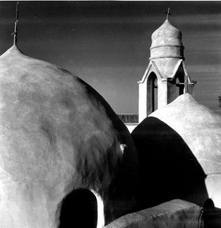
From my journals.  Sunday, May 20, 2007 St. Macarius Monastery.  Wadi Natrun, Egypt

wadi natrunFather Zeno and I spoke for quite a while tonight. I asked him about the path to wisdom.

"Remember that you are nothing," he said. "And remember that you are everything---bought as precious by Christ. And if you're everything, so are others; you are to love them, embrace them. You will find yourself in them, and you will find them in you. Love is the path to wisdom. When you are nothing, you have nothing and need nothing and you are free to live in love."

A great enemy of good living

I wonder how differently we'd tread this sacred earth today if our praying taught us to do this:

"Not to run from one thought to the next, says Theophane the Recluse, but to give each one time to settle in the heart."

From Thomas Merton's journals

How would you treat the clerk at the grocery store?  Your child at the dinner table?  Your spouse?  Balancing the check book, paying bills online? Driving?  Talking with a friend?  Arguing with a foe?

Our distraction, the scatter of our thoughts, our inability to concentrate, our hurry and worry . . . all this is a great enemy of good living, of spiritual awareness, of holiness.

Why leaders can't skimp on their "inner work"

How important is inner work for leaders?  How do we go about it?  How can we cultivate virtue? Parker Palmer says this in his little treasure, Let Your Life Speak: Listening for the Voice of Vocation:

parker palmerCan we help each other deal with the inner issues inherent in leadership?  We can, and I believe we must.  Our frequent failure as leaders to deal with our inner lives leaves too many individuals and institutions in the dark.  From the family to the corporation to the body politic, we are in trouble partly because of the shadows I have named.

"Inner work" should become commonplace in families, schools, and religious institutions, as least, helping us understand that inner work is as real as outer work and invilved skills one can develop, skills like journaling, reflective reading, spiritual friendship, meditation, and prayer.  We can teach our children something that their parents did not always know: if people skimp on their inner work, their outer work will suffer as well (p. 91-2).

Leadership isn't working

Leadership that's focused on skills, power, and outward competence is not helping much---not in the ways that matter. Frankly, it's hurting us. Today's focus on outer skills only masks our inability to produce, or better, cultivate, the kind of leaders who have inner lives that can sustain the rigors of leadership in our tumultuous times. Last year, I was asked to propose a new course for leadership development at the graduate school where I've taught as adjunct faculty for the past decade. I proposed a course called, "The Virtuous Leader: Cultivating a Heart for Skilled Ministry." Virtue, I argued, is what today's leaders really need. More, virtue is what our communities need.

"No thanks," I was told. "Our students want skills, they need to know how to get things done. Virtue is so . . . well . . . old school. It'll never sell."

"Never sell."  Does anyone else see the tragedy in that?

Leadership without virtue is getting us nowhere. It's ruining our communities, betraying our trust, adding to the uncivil culture that plagues our land.

When virtue is out of fashion, we're in big trouble.

Leadership that cultivates virtue requires inner work, serious interior heavy lifting.

And unless we demand virtue from our leaders, and challenge them to do their inner work, we'll keep getting the leaders we deserve.