All Blog Posts

Advancing in the spiritual life: the Jesus Prayer as partner

Continued from previous posts . . . As part of this current series of posts about the stages of spiritual growth, I wrote most recently about the experience called “The Wall.” At the Wall, you have to face what’s standing in the way between you and God—and that’s never easy. “It’s your spiritual practice,” I wrote, “especially interior prayer, meditation, and contemplation that will see you through to the new you that awaits you on the other side.”  In the next few posts, I’ll open up to you a simple way to practice interior prayer.

The method of prayer I’ll teach you is very, very old. Old as St. Paul who taught us to “pray without ceasing” (1 Thessalonians 5.12). Old as Jesus who taught us that the “Kingdom of God is within you” (Luke 17.21), and that when we pray we’re not to go on babbling as so many religious people do, but are instead to enter the closet of our hearts and commune simply with God (Matthew 6.6). A form of this kind of praying is quite possibly as old as Elijah and the prophets of Israel who knew that God’s voice was best heard in “the sound of sheer silence” (1 Kings 19.12).

The Prayer of the Heart (the Jesus Prayer, contemplative prayer, etc) is the most universal spiritual “technology” for achieving what all people seek: union with God. That it’s relatively unknown today doesn’t mean it’s strange or esoteric. Nor is it only for monks and mystics. The monks and mystics all agree that it’s the most beneficial and easily practiced form of prayer available to the most active of people. For millennia housewives and blacksmiths, kings and farmers have practiced the Prayer of the Heart, nourishing a vital spiritual life, cultivating virtue, and living humble lives of love and grace, compassion and courage—bringing hope and wholeness to our often fragile and wounded, yet beautiful world.

In the posts that follow I'll offer you a little guide to this ancient and durable practice that’s making a come back in our day—and not a moment too soon, for the state of our world sorely needs the kind of women and men who are shaped by it.

To be continued . . .
Lectio Divina Might Save Your (Prayer) Life

About the practice of Lectio Divina (divine or spiritual reading), author and blogger, Tony Jones, says:

I discovered lectio divina many years ago, during a very spiritually dry time in my life. In the time since, I have practiced lectio innumerable times, and it’s become a core aspect of my spirituality. Maybe even more importantly, it’s given me a renewed sense of love and appreciation for the Bible (and that’s saying something).

I could say much the same.  (And here's a sample from my own blog)

For more, and for links to his books click here.  Tony's book(s) are a good guide to this practice, especially for Protestants new to the practice.

The risk of the Incarnation

There's an awful lot of taming of this mystery we call the Incarnation. Here Parker Palmer explores the risk of the Incarnation. An apt way of putting things in a time when we're becoming more aware of the tremendous risk it is to be human.

How to cooperate with crisis as a gift of grace

Continued from previous posts: So, when you come to the Wall, you will need to cooperate with the crisis as a gift of grace, as painful as it may be, as demonic as it may seem. For behind it (while not necessarily orchestrating it) is the Hand of God, guiding you to a new awakening to your life in Christ.

Again, as in Stage Four (in fact, all the higher or deeper stages), you will need guidance, spiritual direction from a competent friend, counselor, or pastor---someone who's not threatened by your questions and frustrations, who won't try to fix you, but who knows there's a mystery at work within you and who can hold you in faith as you journey forward past your fears into the newness of God. But here at the Wall, it's your spiritual practices, especially interior prayer, meditation, and contemplation that will see you through to the new you that awaits you on the other side.

When you emerge from this confrontation stripped down, leaner, cleaner, and more open to love---and if you have found a way to release your need for control and to play God---you will be able to say: "What I thought, I needed I don't really need. What I was sure I couldn't live without, I can live without. With God alone I am content." You will be able to say with Jesus, "Lord, not my will but yours be done" (Luke 22.42), and with Mary, "Let it be with me according to your word" (Luke 1.38). This is true spiritual freedom and readies you for the new outward engagement with mission and ministry that is Stage Five.

Facing the Wall doesn't mean that you're now free from the impediments and distractions, the temptations and seductions that hinder your relationship with God. But it does mean that you now know how to face them when they come.

to be continued . . .

A feminine window on the Incarnation of God

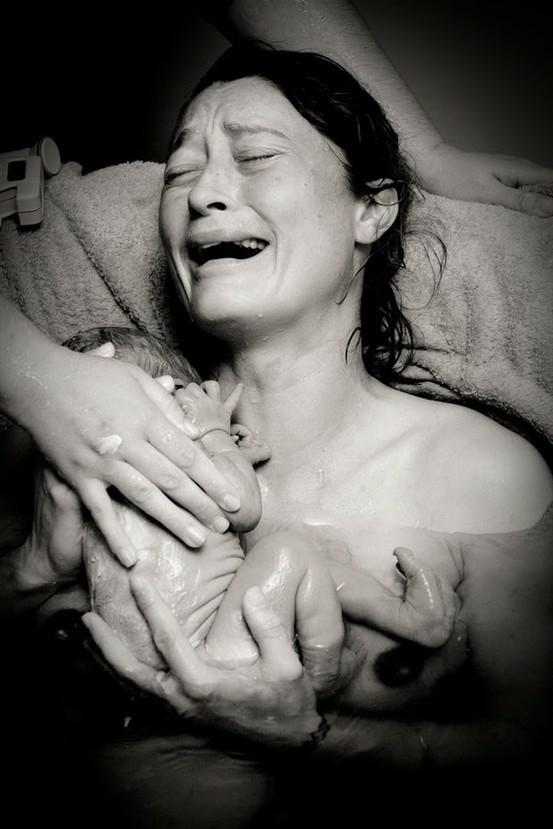
Here's a needed counter-testimony to the often thin preachments of male preachers who can never put the Incarnation in these terms.  This is exceptionally good material for re-encountering Christmas, especially if you're a woman all to familiar with the ways we men have spun this Mystery. . . . And yet my body had taken over and all we could do, all I could do, was surrender to that moment fully. Every muscle in my body was focused, my entire world had narrowed to that very moment. And then there he was, born while I was leaning against our old truck, standing up, into my own hands, nearly 9 pounds of shrieking boy-child humanity, welcomed by my uncontrollable laughter and his father’s uncontrollable relief-tears. A few people applauded.

birthThere wasn’t anything very dignified about giving birth.

And yet it was the moment when I felt the line between the sacred and the secular of my life shatter once and for all. The sacred and holy moments of life are somehow the most raw, the most human moments, aren’t they?

But we keep it quiet, the mess of the Incarnation, because it’s just not church-y enough and men don’t quite understand and it’s personal, private, there aren’t words for this and it’s a bit too much. It’s too much pain, too much waiting, too much humanity, too much God, too much work, too much joy, too much love and far too messy. With far too little control. And sometimes it does not go the way we thought it was supposed to go and then we are also left with questions, with deep sadness, with longing . . .

For more click here.