All Blog Posts

"Teach Us to Pray" :: Prayer as Dance

From Facebook, Lydia Morris commented yesterday on my Flamenco and Prayer post. “Wish I could pray like that,” she says, “strong, fearless, bold, and with all of my everything. Oh how the enemy will tremble when the we fall madly, insanely in love with our God, and can dance and pray with nothing held back. I see Jesus now inviting His beloved to dance.”

Last December 31, 2008, I wrote this poem that improvises on the same theme:

Teach Us to Pray

And this is what I saw–

Leviathan leaping, full length, in radiant delight, up from the dark depths of Mystery.

The night sky, clear; the moon full casting its silver light across the whale-fractured sea.

And then, she crashes full length A million silver shards dancing their holy glee.

As she disappears again into the dark, silent depths, to soak in Thee.

Why then pray like some dead fish in this, God’s sea?

Dance, fly, play, plunge. That’s what prayer is meant to be.

Flamenco and Prayer

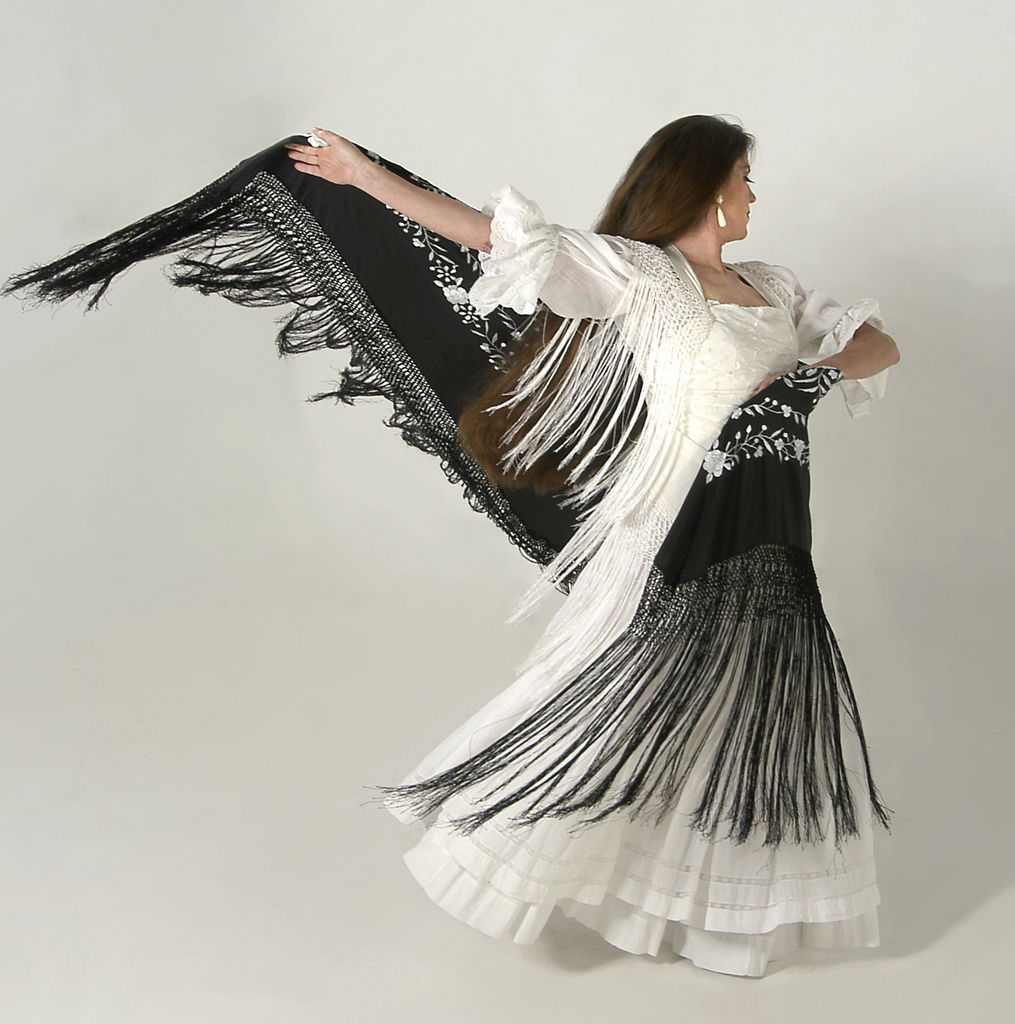
On a recent hot evening in Fresno, La Canela and El Quijote and Cerro Negro, gathered some fifty of us, crowded into the courtyard of our host’s home, into the spirit of Flamenco.  I’ve known Flamenco, even traveled several times to Andalusia, the southern region of Spain, which is home to Flamenco.  But there I’d encountered only commercial Flamenco.  Though beautiful, it’s commercialization misses the true spirit of Flamenco.

duende mantonFlamenco is more than music, song, and dance.  Traditional Flamenco, the Flamenco of the gypsies is communal, spiritual, even contemplative.  In Flamenco—not performed on a stage, but in the round—all participate.  All are together in the sound and movement.  All are caught up in the ecstasy and agony that is the soul of Flamenco.

It’s not saying too much to say that Flamenco is prayer.  And Flamenco helps me see more fully the nature of expressly religious prayer—the kind of prayer I’d be better off praying.  Sadly, like commercial Flamenco, much praying misses the ecstasy and agony that is true prayer.

The art of Flamenco makes me wonder how I’d pray the Psalms, for example, if I let the gypsies show me how to pray them—for the Psalms contain the full anatomy of the human soul.  Too often I pray them as if I were reading a menu.

Dissatisfied With a Bland Way of Life

An ebook excerpt—

The trouble started some fifteen years earlier with a very specific event—a vision, though I was then too blind to see it as one.  There was no ecstatic trance, no audible voice of God.  Nor was I knocked off my horse.  Rather a slant of light broke through, for just a fleeting moment, and left something of itself within me that’s kept me restless ever since.

Presbyterians gather regularly as pastors and elders of local congregations to worship and pray, deliberate and decide.  We eat pie and have our after-the-meeting-parking-lot-meetings where the real business gets talked about.  The meetings are mixed with testimonies to the church in mission, periods of haggling over policy matters, arguing the finer points of parliamentary procedure, and all too rarely an honest to goodness theological debate.  Much of these gatherings, as you might imagine, is rather dull and tedious.  It was during a rather tedious moment that, Stan, a pastor of one of our tall-steepled congregations tried to give a little life to his presentation about recent happenings at one of our conference centers.  Our camp and conference centers are often operating on a shoestring budget and in order to keep afloat try all kinds of things to bring in a little revenue.  Stan chaired the board of a one of our Presbyterian conference centers, which had recently rented its facility to a Hindu group for a spiritual retreat.  Stan was clearly aware that some Presbyterians might wonder why one of our mission organizations had opened its doors to welcome a bunch of Hindus.

After describing the Hindu gathering and the money we’d got hosting them, he told us about the moment when the Hindu leader had introduced him to the Hindu community.  “This,” the Hindu had said, “is the Presbyterian holy man.”  Telling the story, Stan burst into laughter and said, “Now there’s an oxymoron for you!”  And we all laughed, including me.  But as I laughed something cut at me, deep within.  In that laughter, that nervous dismissal, I felt a wound sliced open, a pain, a longing, a deep dissatisfaction with the bland state of pastoral life that could make us all laugh at holiness.  In that moment, a holy light pierced me and called out to me.

I think it was at that very moment that I resolved somewhere deep inside to become a saint, though I didn’t have the foggiest idea how.  Sadly, I didn’t know a single person who could show me the way.

Read more.

Seeing Beauty in Our Suffering

Suffering is inevitable; it's what we do with our suffering that matters.  We can't avoid it, so why not do something constructive with it?  What if we were to look deeply into our suffering and through meditation--earnest examination-- glimpse the flowers that can grow from the composted garbage of our suffering?  Vietnamese Buddhist monk, Thich Nhat Hanh, says that without disciplined deep looking, we see only our pain and fear.  We are absorbed, even consumed by it.

But in deep looking we can also see the fruit our suffering will bear.  We see with the eyes of the Gardener, who prunes and feeds the vines through suffering (John 15).  And through the eyes of the Gardener we see grapes and peaches, tomatoes and blueberries in the unwanted garbage from the kitchen—for the garbage has become rich, dark compost.

So, I sit in prayer, and turn over and over what could otherwise be only garbage.  I enter my heart and feel the ache of fear and sadness, and I turn it over gain.  I may even have to hold my nose at the stench, but I do not flee.  With the eyes of faith I see flowers blooming, squash and beans and other things that delight eye and tongue.

On this, then, Buddhists and Christians are on the same page, for they both know that from death comes new life, from suffering comes beauty—these are two sides of the same coin.  The one is necessary for the other.  In every pain and loss is a new beginning.

I don’t have to create the flowers.  God has already scattered their seed in the compost of my despair.  But I do have to look, to cultivate a seeing eye for the beauty inside every brokenness.  That is hard, hard work.

The Nakedness of Pure Trust

God is love.  And so, prayer, the pursuit of God, is also a pursuit of love. Relationships then are the school of prayer.

There's a Sufi tale about a young man who came to a Sufi master seeking the life of prayer. "Have you ever fallen in love with a woman?" the master asked.  "No, not yet.  I'm only 18," replied the seeker.  "Then go and do that first." (for this tale see the Speaking of Faith interview with Dr. Keshavarz)

I'd like to think I can go the other way: love God and I'll learn to love others.  Frankly, it seems safer, purer.  But it can be more self-deceptive; I can hide behind my piety.  So, the Sufi mystic's got something right.  Love another truly and you'll learn the path to God. Experience the free-fall, the frightening tumble into vulnerability before the other.  Nothing between you.

Become "naked and unafraid" (Genesis 3).  This is the way of prayer . . . fragile and humbling, difficult and painful.

Love, and you'll find yourself right in the middle of the way of prayer.

Seek the face of the other whose love threatens to undo you, whose love will ask you to pull down the masks and illusions, challenging the falsehoods and pretentions.  For ultimately the mind with all its games stands dumb before the mystery that is God, and only love can carry you across the final abyss.

Love is "where God is encountered in the nakedness of pure trust."  Thomas Merton, see:

.